Saturday, January 10, 2015

15 Ways to beat procrastination

If you find yourself constantly scrambling at the last minute to get done what you managed to put off as long as possible, don't worry--you're not alone.

Some people find they actually work better under pressure, but for a lot of people, procrastination is a bad habit that keeps them from ever feeling caught up.

It's a huge time suck. Productivity suffers. Putting everything off to the last possible moment creates unnecessary pressure and stress.

As many as 1 in 5 adults might be procrastinators, but it's not a life sentence. Whether your tendency to put things off is driven by anxiety, fear, or some other demotivator, it can be remedied.
Check out these 15 procrastination-beating techniques from Essay Expert:

Thursday, January 8, 2015

Transfer Files Between a PC and Android Phone using WiFi


The future is wireless and the trend is now being carried over by android phones too . These days a very few people actually prefer to use USB cables for transferring files between their PC’s and their phones / tablets . The reason being transferring files wirelessly is very convenient than transferring files through a USB cable and adding to the advantages, you don’t have to wait beside your PC until the transfers complete. While your files are being transferred to your phone you can carry on with your other works .
Advertisements
There are many apps on the android store that can help you to transfer files wirelessly between your PC and Android phones . Among these apps,  some come with bare and basic features like simply transferring files over WiFi and some add many more exciting features apart from the basic file transferring feature. For me, when it comes to features, i believe in the more the merrier. So in this guide I will make make use of an feature packed app to transfer files between a PC and an android phone .

How to Transfer files Wirelesssly between your Android phone and PC

AirDroid is one such popular and feature packed free android app which i use primarily to transfer files wirelessly across my phone and PC . The app can be used to both receive and send files wirelessly between your PC and android phone. Airdroid is basically an android app which helps to manage your android phone from your PC’s web browser .  The web interface of the app is very neat and the usability is the best among all the apps in its class. All in all its simple, beautiful and highly effective .
Usually while transferring files using AirDroid , i always get transfer speeds in excess of 3.5 Mbps, which is pretty much good. Apart from the file transferring feature, the app has many more useful features like :
  • You can view photos from your phone
  • You can send send SMS messages from PC
  • You can play music / videos from your phone
  • You can use your phone’s camera on your PC
  • You can take screenshots of your Phone
  • You can backup app as apk on your PC
All of this and more can be performed from AirDroid’s PC interface itself . Now lets move ahead and find out how we can use airdroid to transfer files wirelessly between your PC and Android phone over a WiFi network .
Advertisements

Instructions to transfer files wirelessly from your PC to your Phone

  • Step 1: Install AirDroid from the Google play store and open the app on your phone .
  • Step 2: Connect to your PC’s wifi network from your android phone . ( If you are using a USB WiFi dongle like me then you can use Connectify to create a Wifi hotspot )
  • Step 3: Open the AirDroid app and Instantly the app will detect your WiFi network and start the AirDroid  server . The app will provide you with an ip address , which you have to type into your PC’s web browser to connect to the AirDroid  server . 
airdroid-app-screenshoot
  • Step 4: Manually type in the ip address provided by the AirDroid app in your web browser and press enter  . Simultaneously You will see the below screen and your android phone will prompt you to accept the connection .
accept-airdroid-connection-on-phone
  • Step 5: On your android phone , tap on accept and you will be able to access the AirDroid interface on your PC’s web browser .
accept-connection-request-on-android-phone
  • Step 6: To the right of AirDroid web interface , there is a toolbox , click the file icon and next you can select from the folder / files icon to transfer a file or folder to your android phone .
send-files-through-airdroid
  • Step 7: To transfer a file to you android phone select the file tab from the AirDroid toolbox and click on the folder /file icon to select from any file from your PC .  As soon as you select the file , AirDroid will start transferring the file to your android phone . similarly you can also transfer entire folders to your android phone .
files-transferring-to-android-phone-from-pc
The files will be stored in the following locations on your phone : SD card/airdroid/upload

Transferring files from your Phone to your PC

If you want to transfer files from your Android phone to your PC , then you have to use the Airdroid web interface on your PC . All you need to do is click on the files icon from AirDroid’s web interface and select a file from the file browser that opens up , right click on any file and select download to download the file to your PC .
transferring-fiels-from-phone-to-pc-over-wifi
The file will be downloaded as regular downloads in your web browser and can be accessed from the download menu . Here is a screenshot of the transfer speed i was getting while downloading files from my android phone . I was able to get a constant  download speed of 3.5 Mbps which peaked around 4Mbps .
transfer-speed-over-wifi
My fav is AirDroid <this is not an endorsment>

Wednesday, August 6, 2014

A Common Virus Is Eating Your Gut Bacteria

A Common Virus Is Eating Your Gut Bacteria

The only time you’re completely human is before you’re born. For the rest of your life, microbes from the environment colonize ecosystems around your body, outnumbering your 37 trillion human cells by about 10 to one.
Over the past decade, scientists have been exploring how the microbes living on and inside the body influence our health. Why do some make us sick while others protect against pathogens?
Rather than trying to grow each species in a lab and reading its sequence of DNA letters to make a single genome, researchers are using a more economical approach: collect samples from one location (such as the gut), chop-up all the DNA, then read the short fragments. The result is a ‘metagenome’, the collected genetic material from an entire microbial community.
Metagenomes generate a huge amount of data at relatively low cost. For $170m, the first phase of the Human Microbiome Project catalogued the microbes at five sites – mouth, nose, skin, urogenital and gastrointestinal tracts – in 242 American adults. As well as revealing the secrets of known species, information in the depths of metagenomes can also be mined to uncover microbes that we never knew we had, such as a newly-discovered virus called crAssphage.
T4-bacteriophage
A bacteriophage virus (CC BY-NC-SA 2.0 / original by origamiwolf: https://flic.kr/p/oDCK1)
The crAssphage virus is a bacteriophage, or ‘eater of bacteria’. It infects species of Bacteroides, a group that makes up 50% of gut bacteria on average and behaves as both good and bad bacteria. Most of the time the relationship is mutually beneficial: we provide a home, they help digest our food. But they can also be harmful, being associated with health issues such as diabetes and obesity. The strain enterotoxigenic Bacteroides fragilis is linked to colorectal cancer. By preying on Bacteroides, crAssphage probably helps keep us healthy.
The virus was discovered by Dr Bas Dutilh, a bioinformatician at Radboud University Medical Centre in the Netherlands, who rebuilt its genome from DNA fragments in faeces. In programming, it’s normal to combine words and capitalize the first letter, and the computer tool that Dutilh developed to assemble the viral genome is called crAss (for ‘cross Assembly’). He tells Forbes that the virus’s name wasn’t inspired by where it came from.
“Initially we didn’t give it any name, it was just called ‘the new virus’,” says Dutilh, adding that one of the scientists reviewing his research paper suggested giving the virus a name. “Then I was like, Oh okay, maybe I can use this opportunity to advertise my computer tool. And basically that’s how it got the name crAssphage.”
Reconstructing crAssphage’s genome was no mean feat, as each metagenome includes DNA fragments from an entire community of microbes. Imagine a metagenome as a box full of pieces from hundreds of different puzzles. The genome of a known organism can be assembled using a related species as a guide, like looking at the picture on the front of the box, but how do you find something that you don’t even know exists?
Dutilh’s computer tool pieces a genome together by detecting DNA fragments that are equally abundant within the same metagenome. Say you find puzzle pieces with the same distinctive shape in different boxes, except that box A contains 10 copies of each piece while box B has 100 copies. Because the distinctive pieces are ‘co-abundant’ within a box, they’re probably parts of the same puzzle.
Working with collaborators at San Diego State University, Dutilh used his crAss software to analyze faecal metagenomes from 12 individuals. This revealed a set of distinctive DNA fragments that could be assembled into a genome. DNA tests on one of the 12 stool samples confirmed that crAssphage was there.
The researchers then searched public DNA databases and detected the virus in 73% of 466 faecal metagenomes from the US, Europe and South Korea. This wide distribution implies that crAssphage occurs in up to three-quarters of people around the world, and means trillions of viruses are probably living in your gut right now.
Not much is known about crAssphage. It’s too small to be seen under a light microscope, but will no doubt have the angular head, tail and ‘legs’ typical of bacteriophages. Its genome is 97,000 letters long, and patterns in its DNA indicate the virus has 80 genes, only half of which are similar to known genetic sequences. Some encode structural proteins and molecules that manipulate its host’s DNA-making machinery, and several genes are predicted to encode proteins that attach to Bacteroides.
Bacteroides fragilis
Bacteroides fragilis (source: http://phil.cdc.gov)
Dutilh and his collaborators have several lines of evidence to indicate that crAssphage infects Bacteroides. Parasites need hosts, so you would expect a relationship between numbers of bacteriophages and bacteria. Indeed, when the abundance of crAssphage DNA was compared against the bacterial strains in 151 metagenomes from the Human Microbiome Project, there was a clear correlation between the amount of crAssphage and Bacteroides DNA. When the virus was used to search a database of 3000 bacterial genomes for CRISPR sequences – patterns in a bacterium’s immune system that record encounters with viral DNA, like antibodies matching antigens – Bacteroides was the top search result.
As well as controlling gut bacteria in healthy people, crAssphage might one day be used to fight disease. For example, you could isolate a virus that specifically targets pathogenic strains of Bacteroides fragilis. A genetically-engineered crAssphage could also serve as a therapeutic ‘phage vector’ for delivering drugs or vitamins.

So far, metagenome research has focused on bacteria. Viruses have been neglected, partly because it’s assumed their DNA evolves too quickly to detect. But as crAssphage shows, viruses can be extremely abundant and therefore play a large role in a microbial community.
“Our intestinal bacteria are one huge ecosystem,” says Dutilh. “But to understand that ecosystem, you need to understand the viruses as well.”

Nanu taking on Skype with free calls via 2G to landlines or mobile phones


http://cdn1.tnwcdn.com/wp-content/blogs.dir/1/files/2014/08/Nanu-phone-visual.jpg

Nanu is an Android app taking on Skype with free calls via 2G and to landlines or mobile phones

There’s yet another calling app on the market that’s out to challenge dominant player Skype.
Nanu, an Android app that was launched today, touts the ability to make free calls even via a sluggish 2G network connection, and to non-Nanu users including landlines and mobile phone numbers.
The catch? Ads.

While waiting for your call to be picked up, a short ad will play over the ringtone. The ad will end immediately once your call is connected to the other person. The revenue from the advertisers helps to subsidize the cost of the call, so users don’t have to pay a cent. Nanu tells TNW that it is working with companies such as KFC, Nestle, PayPal and HTC among others.


The 2G angle that Nanu has appeals to emerging markets where mobile networks are still not as developed. This also helps it stand out from existing apps which include not only Skype, but also Viber and calling services that have been integrated into messaging apps.

Behind Nanu is a father-and-son team, Martin and Daniel Nygate, who provided technical solutions to the maritime industry. They designed Nanu from the ground up to equip it with a technology that operates in low-bandwidth environments and is combined with its hybrid network infrastructure.
Meanwhile, the free calls to mobile phones and landlines will probably appeal to many — but initially there will only be 15 free minutes worth of credit for calls to non-Nanu users, and only for the first million who download the app. The free calls to landlines can only be made to 41 countries for now, including the US and the UK, while the free calls to mobile phones will only work for Germany, Hungary, India, Ireland, Israel, Singapore, Spain, Thailand, and the US.

You can’t pay for credit even if you may want to. Michael Nygate says that the number of free minutes and list of countries will grow as more users get on the app, as that will help generate more advertising revenue which can go back into the system to subsidize more calls. This sounds like a tactic for word-of-mouth marketing of Nanu via its existing users, but it may be something that works.

The team revealed that it has an ambitious goal of eventually providing unlimited free Nanu to non-Nanu calls as it amasses users and in turn, advertisers.
The app is only on Android now, but the team says that an iOS app will be coming in the next two to three months, with other platforms following.
 Nanu: Google Play

Thursday, July 31, 2014

Ransomware Discovered


New Simplocker Ransomware Discovered for Android Devices

Latest Hacking News  


A New variant of the Android Ransomware known as ‘SimpLocker’ has been spotted by Security researchers. The Ransomware encrypts files stored on the SD memory cards of Android devices has been updated to target English-speaking users with FBI-themed alerts.
Infected users recieve a message in English that masquerades as an alert from the U.S. Federal Bureau of Investigation about illegal pornographic content being found on the device. The victims are instructed to pay a so-called fine of $300 through a payment service called MoneyPak.
The previous list of file types encrypted by the old version of the malware included mostly images and documents. The new version also encrypts archive files with the .zip, .7z and .rar extensions.
The malware installer poses as a Flash video player application and requests administrator privileges. This makes the new Simplocker much harder to remove once installed.
The good news is that Simplocker’s authors still haven’t improved their encryption implementation, which relies on a hardcoded key which can therefore be undone. The new variant uses a different key than the original versions, but users are still able to recover their files without paying.

Wednesday, July 30, 2014

Galaxy S4 Smartphone Burns Under Pillow

Girl’s Galaxy S4 Smartphone Burns Under Her Pillow as She Sleeps

Charging our devices as we sleep feels like a harmless routine. For one young Samsung smartphone owner, however, that habit almost turned heated. 
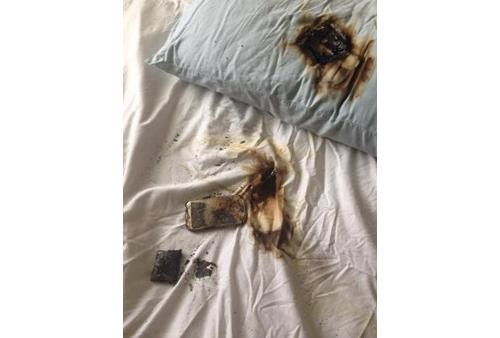
Last week, a 13-year-old North Texas girl plugged her Samsung Galaxy S4 in for its nightly juice-up before hitting the sack, only to be awoken by the smell of something burning hours later. When she got up and searched around for the source of the stench, she realized that she had wedged her charging phone under her pillow. And not only was the backside of the pillow scorched, but the phone was fried into an unrecognizable slab of plastic and melted components.
The event, according to FOX 4, left the family a bit surprised.
“We have a reasonable expectation that the products we buy are going to be safe,” the girl’s father said. He told FOX that he suspects that the phone overheated, causing the battery to swell and start a fire.
Girl’s Galaxy S4 Smartphone Burns Under Her Pillow as She Sleeps
(FOX 4)
The battery in the Galaxy phone was an aftermarket replacement, something a Samsung representative told FOX could have been part of the problem. The other issue, according to Samsung, was that the phone was being smothered by a pillow, restricting airflow while charging. This is something the manufacturer warns against in the device’s instruction materials.
Despite these miscues by the young Galaxy owner, Samsung told FOX and Yahoo Tech that the company will replace the phone, the pillow, and the mattress involved in the accident.
“Samsung takes product quality and customer safety very seriously,” a representative said.
“We have offered the customer a new device, and we are working to retrieve the product so that we can investigate what happened. We strongly advise all customers follow the guidelines of CTIA for care and handling wireless batteries. Additionally, our user manuals warn customers that phones must have adequate ventilation and airflow and should not be covered with material such as bedding.”
But our Texas family should hope for better service than the reddit user who recently posted a similar story has received. The owner alleges that his Galaxy S4 was also fried while charging, even though the charger and battery that came with it were in use. Now, despite being told by Samsung that the broken unit would be replaced, a month later, the redditor claims to be still waiting.

Tuesday, July 8, 2014

Remote control contraceptive

'Remote control' contraceptive chip available 'by 2018'

Chip from Microchips  
The chip would need replacing every 16 years (chip pictured is not the one described in the article)

A contraceptive computer chip that can be controlled by remote control has been developed in Massachusetts.
The chip is implanted under a woman's skin, releasing a small dose of levonorgestrel, a hormone.
This will happen every day for 16 years, but can be stopped at any time by using a wireless remote control.
The project has been backed by Bill Gates, and will be submitted for pre-clinical testing in the US next year - and possibly go on sale by 2018.
The device measures 20mm x 20mm x 7mm and will be "competitively priced", its creators said.
Convenience factor Tiny reservoirs of the hormone are stored on a 1.5cm-wide microchip within the device.
A small electric charge melts an ultra-thin seal around the levonorgestrel, releasing the 30 microgram dose into the body.
There are other types of contraceptive implant available, the researchers noted, but all require a trip to a clinic and an outpatient procedure in order to be deactivated.

“Start Quote

Someone across the room cannot re-programme your implant”
Dr Robert Farra
"The ability to turn the device on and off provides a certain convenience factor for those who are planning their family," said Dr Robert Farra from MIT.
The next challenge for the team is to ensure the absolute security of the device to prevent activation or deactivation by another person without the woman's knowledge.
"Communication with the implant has to occur at skin contact level distance," said Dr Farra.
"Someone across the room cannot re-programme your implant.
"Then we have secure encryption. That prevents someone from trying to interpret or intervene between the communications."
Huge range The same technology could be used to administer other drugs.
Simon Karger, head of the surgical and interventional business at Cambridge Consultants, said that implanted technology like this faces a range of challenges and risks.
But he added that overall "the value to the patient of these types of implant can be huge and we foresee a future in which a huge range of conditions are treated through smart implanted systems".
Pills Implanted devices could help people who forget to take medication at the correct time
The innovation comes at a time when governments and organisations around the world have agreed to try to bring family planning to around 120 million more women by 2020.
This challenge opens the door to this kind of implant technology being used in areas where access to traditional contraceptives is limited - a bigger priority, argued Gavin Corley, a biomedical engineer.
"That's a humanitarian application as opposed to satisfying a first-world need," he told the BBC.