Wednesday, August 5, 2015

Using an EE Power Bar? Check if yours poses a fire risk

http://cdn1.tnwcdn.com/wp-content/blogs.dir/1/files/2015/08/EEPowerBarrecall.jpg

Quite unsurprisingly following the story of the exploding charger at the end of last month, network operator EE has issued a recall of a particular batch of its portable Power Bars.
According to the announcement, only batch E1-06 pose a fire safety risk and need to be returned. Bars from other batches aren’t affected, it added.
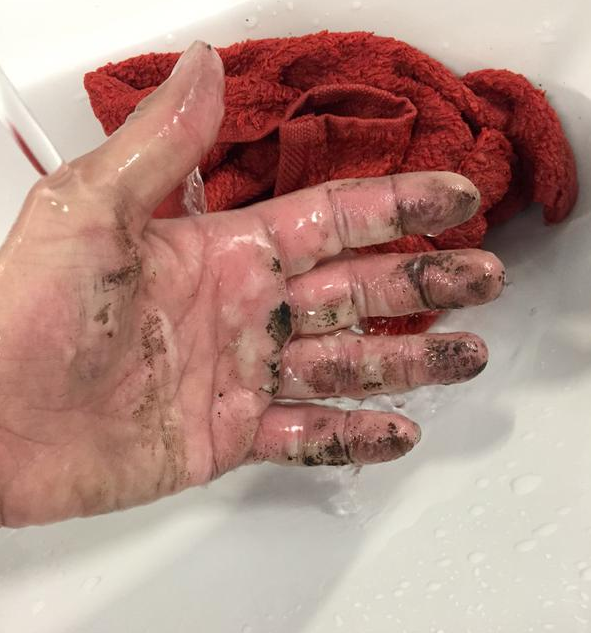
Katy Emslie’s badly burnt hand, which resulted from trying to extinguish a flaming EE Power Bar.
“It’s our intention to replace these chargers once we’ve completed our investigations; we’ll be in touch once these have been concluded. We’re really sorry for any inconvenience this may cause,” EE says.
If you’ve got an EE Power Bar, best check the little code on the side to see if you have one of the special potentially ‘fizzy’ models.
Until the investigation has been completed, the exchange program has been temporarily suspended.

Tuesday, July 14, 2015

the Ugly Indian

There's a silent revolution brewing in India, and it's called The Ugly Indian. It is anonymous, faceless and leaderless, and has seen thousands of citizens coming out to fix local civic problems following a simple motto: Kaam Chalu Mooh Bandh. Only Work No Talk. What started off as a series of social experiments in Bangalore in 2011, to see what it takes to change everyday ugly Indian behaviour in public spaces (littering, spitting paan, public urination and more), has now transformed into a nation-wide movement that is spreading virally – both on social media, and on the ground. The centrepiece of the TUI approach is the 'spotfix ' where ugly spots are 'fixed' by citizens. There is no activism, no sloganeering, no lecturing, no finger-pointing and no ideological debates – just a sincere attempt to solve problems by focusing on a spot - using one's own time, hands and money.

Monday, June 29, 2015

Facebook Is Opening Its First Office in Africa

Facebook Is Opening Its First Office in Africa

Johannesburg, South Africa.
Robyn Gwilt/ Shutterstock
Johannesburg, South Africa.
Facebook, which has been working to build its user base in Africa through programs like Internet.org and lightweight versions of its app, is opening a new business office in Johannesburg, South Africa, the company’s first permanent office on the continent.
The office will serve as a sales hub, helping Facebook learn about and attract small businesses from the region that may want to advertise to Facebook’s audience, which is growing in the region. Facebook has hired Nunu Ntshingila, chairman of Ogilvy South Africa, to run the new office as the company’s Head of Africa, a new position.

International revenue has always been important for Facebook. More than half of the company’s ad revenue comes from outside the United States and Canada, and has for a number of years.
That percentage is slowly eroding, though, from 56 percent in Q1 2013 to 52 percent last quarter. Facebook is relying more and more on high-priced ads in North America versus other parts of the world. A new office like the one in Africa could help expand on that international business.
Facebook is also hoping to learn more about what kinds of advertising actually work in Africa as a way to lure big brands like Coca-Cola and Virgin Mobile that may want to reach the site’s African user base. The company launched a Creative Accelerator program earlier this year to do just that.
Product head Chris Cox also talked at the Cannes Lions advertising festival last week about Facebook’s plans to build ads that work on feature phones for users who don’t have strong wireless connections.

All of this adds up to a pretty healthy interest in Africa, and Facebook hasn’t been shy about its aspirations. Africa is still very much an emerging market; most of the continent is still without Internet access and those who are online are getting there on mobile devices. For Facebook, a service that’s already amassed 1.4 billion users, Africa provides a region where there’s still plenty of room for growth.

Facebook is experiencing some of that growth now. There are now 120 million Africans who visit Facebook each month, up from 100 million back in September. That’s 20 percent growth in nine months, almost three times the growth rate of Facebook’s total user base.
Facebook has made significant efforts in trying to reach this group of Internet newbies. Internet.org is probably the most well known — and most criticized — example. The initiative offers a free slate of Internet services, including Facebook, to some parts of the world where Internet is not widely available.

Of the 14 countries with Internet.org access, six of them are in Africa.
The new office will not include Internet.org employees, though, at least not right now. Facebook plans to hire 25 employees in its South Africa office, all of them on the business and advertising side of the fence. That number will increase throughout the year.

Sunday, June 28, 2015

SpaceX's Faclon 9 rocket explodes mid-flight

The Falcon 9 rocket launched from Cape Canaveral this morning exploded just minutes after liftoff. The rocket was supposed to deliver cargo to the International Space Station, and no humans were on board. It was the first Falcon 9 that has ever failed, following 18 successful missions.
The mission was also going to serve as the third test of SpaceX's reusable rocket plan. The first stage of the Falcon 9 was supposed to separate three minutes after launch and land itself on a drone ship at sea. The next time SpaceX is scheduled to test the Falcon 9's reusability is on the August 9th launch of the Jason-3 satellite. SpaceX has said that landing will be attempted on land at Vandenburg Airforce Base, not at sea.

There is no immediate threat to life of the astronauts aboard the space station. There is no immediate threat to life of the astronauts aboard the space station. Russia's space agency, Roscosmos, has another resupply mission scheduled for July 3rd. Since NASA always plans ahead, the astronauts are currently stocked through October with supplies.

Still, this is the third space station resupply mission to fail in the last year. In October, Orbital ATK's Antares rocket exploded on the launchpad. And last month, Russia's space agency Roscosmos sent a resupply ship to the station only to have it spin wildly out of control and eventually burn up in the Earth's atmosphere.

Monday, June 22, 2015

5 Myths About Charging Phones

We have all heard those crazy stories about phone chargers. Some are so farfetched that they borderline on superstition. There are a lot of rules regarding charging phones. Some of them are true and should be followed by everyone. However, some are just plain foolish. Over the years, batteries have evolved just as much as phones had. These batteries will last for around three to five years if taken proper care of.
Here are the top five myths about charging phones that have been proven untrue-

5. MYTH– Different chargers will destroy the battery
Truth- Different chargers work fine as long as they are not replicas
Image Credit: https://www.pinterest.com/pin/277323289530491479/
People claim that using different chargers for different phones will affect the battery of the phone. Now this is nothing but a myth. Different chargers work just as fine as the original charger. The performance may not be optimum, but it will charge fine without damaging the battery. The problem is using knockoff chargers. Those things can and does damage the batteries.

4. MYTH– Charging all night will kill your battery
Truth– Your battery knows when to stop.
The myth about charging overnight is a common one. People think that charging all throughout the night will damage and eventually kill the battery. The truth is that your batteries are equipped to take the overnight charging. Once it reaches maximum charge, it stops charging altogether. This means that the battery isn’t even in use at all. However, that does not mean you will charge your phone all night every day. Keeping the phone charged between 40% to 80% will allow your battery to last longer.

 3. MYTH – Shouldn’t use the phone while it is charging
Truth- Using it is fine as long as the chargers are original.
Image Credit: https://www.pinterest.com/pin/56928382764031328/
There are legit concerns over this charging myth. People believe that if you use the phone while it is charging then the phone will explode. Some say that you can be electrocuted if you are using it while the charger is on. There have been a few incidents where the phone did explode. However in all of those cases, the user was charging their phones with fake charges. Those things can be deadly. If you are using the manufacturer approved charges then there are no risks of the phone exploding. So you can use it as much as you want.

2. MYTH- Never turn off your phone.
Truth- Turning off the phone helps the battery.
Everything has its limits even if the thing in question is a phone. Turning off your phone every once in a while helps the battery life. According to an Apple expert, turning off your phone from time to time will maximize the battery life. So if you are somebody who is always on the phone, it is advisable that you turn off your phone at night to get the best out of your battery.

1. MYTH- Charge your phone only when it is completely dead.
Truth- Frequent charging is better than deep charging.
The idea that your phone should be charged only when it is completely drained is actually wrong.  If you constantly let your batteries drain till 0% then the battery becomes somewhat unstable. So it is better to charge your phone every now and then.

BONUS FACT – Heat will destroy your battery.
There is no denying the fact that heating will damage your battery. Lithium-ion batteries heat up as you charge them. So if you place them near a hot surface then chances are that they will be damaged. Similarly, cold temperatures also affect the batteries. Cold batteries die quicker in low temperatures.

Monday, June 15, 2015

Unlock your phone using your EAR

Forget fingerprint identification, Amazon has developed a way to unlock phones using the shape of a user's ear.

 
Amazon Ear
The ear is as unique as a fingerprint and could be used to unlock phones

Amazon has received a patent for technology that would see a smartphone scan a user's ear to unlock itself.
A smartphone's front-facing camera would be used to scan the user's ear shape, which can be as unique as a person's fingerprint.
The image would then be matched with the saved image and outline of the user's ear, unlocking the device.
Amazon Ear
The smartphone would take a photograph of the ear
The abstract of the patent paper said: "An electronic device can attempt to capture at least one image including at least a portion of a user's ear when the user utilises the electronic device for certain purposes, such as to receive a call or listen to an audio file."
Researchers have previously said the ear is one of the most reliable biometric identification devices as it does not change much as someone ages.
Amazon Ear
It would then process the image to try to match it to the user
The next version of Android - Android M - will add fingerprint recognition to phones, following Apple's Touch ID system which was launched on the iPhone 5S.
Amazon could try to use to ear-unlocking system to differentiate itself from two of the big players in the smartphone market.
There is also a possible alternative use for the ear recognition technology - automatic speaker-phone volume adjustment based on the distance from the phone to the user's ear.

Thursday, January 15, 2015

Samsung approaches BlackBerry about buyout


(Reuters) - Samsung Electronics Co Ltd (005930.KS) recently approached BlackBerry Ltd (BBRY.O) (BB.TO) about buying the smartphone maker for as much as $7.5 billion in a play for its patent portfolio, according to a person familiar with the matter and documents seen by Reuters.
South Korea's Samsung proposed an initial price range of $13.35 to $15.49 per share, representing a premium of 38 percent to 60 percent over BlackBerry's current trading price, the source said.
Executives from the two companies, which are working with advisers, met last week to discuss a potential transaction, the source said, asking not to be identified because the conversations are private.
It remains unclear whether Blackberry, which has regained some of its lost swagger under CEO John Chen over the past year or so, was open to the approach. Representatives for the company declined to comment.
News of the meeting, which sent Blackberry shares up nearly 30 percent, comes as the smartphone maker looks for renewed growth and for how to regain market share it has lost to Apple Inc, Google Inc and Samsung.
A deal would give Samsung access to Blackberry's patents, which the source said would help it take on arch rival Apple (AAPL.O).
Any tie up with Samsung would have to have the blessing of Prem Watsa, whose Fairfax Financial Holdings Ltd (FFH.TO) is a major Blackberry shareholder. Fairfax helped bankroll a debt recapitalization that led to Chen's arrival in November 2013 as CEO of the one-time investor darling that pioneered the smartphone.
BlackBerry launched its long-awaited Classic model on Wednesday, hoping to help win back market share and woo customers still using older devices with a keyboard. The phone resembles its once popular Bold and Curve handsets.
In the third quarter, revenue at Blackberry fell to $793 million from $1.19 billion a year earlier, falling short of analysts' expectations of $931.5 million.
Shares of Blackberry jumped as much as 30 percent on heavy volume in afternoon trading at $29.71 per share in New York.
The offer price would imply an enterprise value of $6 billion to $7.5 billion for BlackBerry, assuming conversion of $1.25 billion of convertible debt, according to the documents.
BlackBerry announced a high-profile security partnership with Samsung in November. The partnership will wed BlackBerry's security platform with the South Korean company's own security software for its Galaxy devices.
Representatives for BlackBerry declined to comment while Samsung and Fairfax could not be immediately reached for comment.
(Reporting by Jennifer Ablan and Liana Baker in New York, additional reporting by Alastair Sharp in Toronto Editing by Soyoung Kim and Christian Plumb)