Thursday, December 3, 2015

What is the Difference Between a Quick and Full Format?

What is the Difference Between a Quick and Full Format?
The term formatting is used for different things.
First it is used for low-level formatting of a hard disk. This includes taking the disk and dividing it into small units – the blocks, which can be accessed by the operating system. Nowadays the manufacturers configure the sector size (like 512 bytes or 4096 bytes) and low-level format the disk. Normally the user can’t low-level format a hard disk anymore.
Second, formatting is used for high-level formatting of a hard disk. This means that the operating system is writing a file system structure to the disk. With good old FAT (File Allocation Table) for example, the system would write a boot sector to the first disk sector and an empty FAT to the following sectors. Empty in this case means that all entries in the File Allocation Table are marked as unused.
High-level formatting might include scanning the disk for bad sectors (check if every sector can be read), and it might include writing zeroes to all data sectors on the disk.
When you format a disk, Windows XP does a high level format and it writes a file system structure to the disk. When you say full format, then Windows XP also scans all sectors on the disk for bad sectors (see MSKB 302686). Since Windows Vista, a full format writes zeroes to all data sectors (see MSKB 941961). Accessing each sector on the disk takes much more time than the quick format, which only writes the blocks that contain the file system structure. So normally a quick format is what you want because it is much faster. But there are cases where you might want to do a full format.
1. You might have a disk that you want to destroy or give away. If you just do a quick format, then the file data is still on the disk, only the file system structure (file names and information where the files are stored on the disk) are deleted. With specialized programs someone might try to “undelete” your files – the data is still there, the task of the program is to guess/know which data block belongs to which file.
2. You might not be sure if the hard disk is in a good state. Then a full format is a good idea because it accesses every sector, so if any sector is bad, this will be recognized. With a quick format only a few sectors will be written to. With bad luck you end up with a successful quick format, and when you want to write data to the disk later, it fails. Then you will probably be wishing you had done a full format that would have checked the entire disk right at the beginning. Of course you can always run a ‘chkdsk /r’ later to scan a disk for bad sectors.
You asked about risks and consistency. I wrote about the risks above. Regarding consistency there is no difference. With every format the operating system writes the file system structure, and this structure is the starting point for every file system access. It does not make any difference if unused sectors are zeroed out or filled with random data.
For more information, you might want to take a look at the Wikipedia Article for Formatting.

Windows installation of 7, 8, 8.1, 10 hard disk format. 
      
When you first pop-in your Windows disk, the operating system will prompt these choices for you to choose from. Here are the format options:
  • Format the partition by using the NTFS file system (Quick)
  • Format the partition by using the FAT file system (Quick)
  • Format the partition by using the NTFS file system
  • Format the partition by using the FAT file system
format
When you choose to run a Full format on a volume, files are removed from the volume that you are formatting and the hard disk is scanned for bad sectors. The scan for bad sectors is the reason why the Full format takes twice as long as the Quick format.
If you choose the Quick format option, the format removes files from the partition, but does not scan the disk for bad sectors. This option is best when your hard disk has been previously formatted and you are sure that your hard disk is not damaged nor has bad sectors. This can be a problem later because bad sectors that are not located can cause damage to the hard drive. For example, if data is later installed on this “bad sector”, the data will read errors or as corrupted files.
In simple terms, a Full format will truly scrub through the hard drive from scratch, rebuild all of its file structures, and scans the drive to make sure that everything is on a satisfactory level. On the other hand, what a Quick format does is lay down a blank FAT and directory table without checking for bad sectors.
This is why when you buy a brand-new unformatted hard drive, you cannot give it a Quick format. The drive needs a Full Format because it needs the entire file structures set-up, so the FAT actually has blocks and sectors to track, rather than a chaotic mess. However, like we mention earlier, if your hard drive is already has a clean slate and has no bad sectors, a Quick format will be suitable.
Also, If you installed Windows on a partition that was formatted by using the Quick format option, you can check your hard drive by using the chkdsk /r command after the installation of Windows is completed. In conclusion—don’t be lazy. You already went the distance with the tedious task of reformatting. Select the Full Format and both your computer and you will live in harmony… until the next format.
Harmony

Wednesday, September 2, 2015

formatting emmc, no, no, no, !!!

If you use the setting format EMMC in clockwork mod recovery > mounts/storage, consider your phone BRICKED. Dead.

You will have a totally blank Internal SD Card that will have no Operating System, and the card will have to be partitioned with a file allocation table before the operating system can be restored!

Unless you know how to set up partitions and give them their sizes and to format them, you are totally screwed,:), and you will have to recover your phone.

If you select the setting format emmc and you have an external SD card installed, it may wipe and format this card by default as it may recognize this card as the default storage so if you don't want to lose all the data on your external SD card by mistake, then remove it.

EMMC stands for Embedded Multi Media Card, and not external memory card like some people believe, its the built in SD card, that's built into the electronic circuit board on your phone, its embedded.

Its split into partitions, in order to give the operating system its own space to boot, hold and execute its system files.

The FAT boot method is the same process as MMC/SD Configuration flashing and booting procedures, which are not embedded like your external SD card or the type you would insert in your portable camera.

The EMMC/SD card must be formatted with the correct partitions prior to flashing any device. Once the EMMC/SD is configured it will contain two separate partitions that will be used to boot the device.

The FAT32 partition is used for uboot, xloader and kernel. The ext3 partition is used for the actual file system. Once both of these are loaded onto an EMMC/SD the device can boot up and run the selected file system.

The EMMC is an Embedded device. So we have to partition and format the EMMC using a kernel utility like (fdisk, mke2fs) and what's available in the File System.

So there you have it my friends, LEAVE well alone :) this is an administrative setting and only for advanced users, not for Joe bloggs!!

King Wasabi

Spider...

Friday, August 14, 2015

FIDO U2F Security Key

More about the FIDO U2F Security Key

Each Security Key has an individualized secure chip which performs cryptographic functions triggered by a simple touch of the key. You never see the details, but behind the scenes FIDO U2F Security Key provides a unique public and private key pair for each application it protects. Only those keys can correctly complete the cryptographic challenge required for login.
The secure chip is of the same class as those used in SIM Cards, electronic passports, military electronic IDs and chip-and-pin credit cards. Like those devices, the chip is specially “hardened” so it’s extremely difficult to steal the secrets hidden inside. The secrets contained in the Security Key belong to the end-user exclusively and are never transferred, copied or stored by a service provider or any other application provider.
This is not a biometric device, instead it uses a capacitive sensor activated by the small bit of electricity the human body naturally produces.

The Skinny on Universal Second Factor (U2F)

FIDO U2F is an emerging open authentication standards initiative with strong support from more than 120 end-user and vendor companies in the FIDO Alliance, a consortium working to bring strong authentication to the masses.
U2F breaks the mold for high-security, public-key hardware devices by removing the complexity of drivers, clients software and the traditional costly certificate authority (CA) model. With FIDO U2F, one single device can be used with any number of online services with no user information or encryption keys shared between the service providers.
Internet and cloud services can dramatically improve the security of their existing password infrastructure by adding a simple but strong, U2F-based second factor for login.
For more information, you can access the full U2F Specifications on the FIDO Alliance website.

More from Yubico

Take a look at our other Yubico YubiKeys, which support a range of authentication methods and security features in different combinations and form factors including one-time passcodes, OATH, Challenge-Response, Smart Card functionality (including OpenPGP and PIV), MIFARE, and Near-Field Communications.
Learn more about how you can integrate FIDO U2F protocol with your online service at developers.yubico.com

Wednesday, August 5, 2015

Using an EE Power Bar? Check if yours poses a fire risk

http://cdn1.tnwcdn.com/wp-content/blogs.dir/1/files/2015/08/EEPowerBarrecall.jpg

Quite unsurprisingly following the story of the exploding charger at the end of last month, network operator EE has issued a recall of a particular batch of its portable Power Bars.
According to the announcement, only batch E1-06 pose a fire safety risk and need to be returned. Bars from other batches aren’t affected, it added.
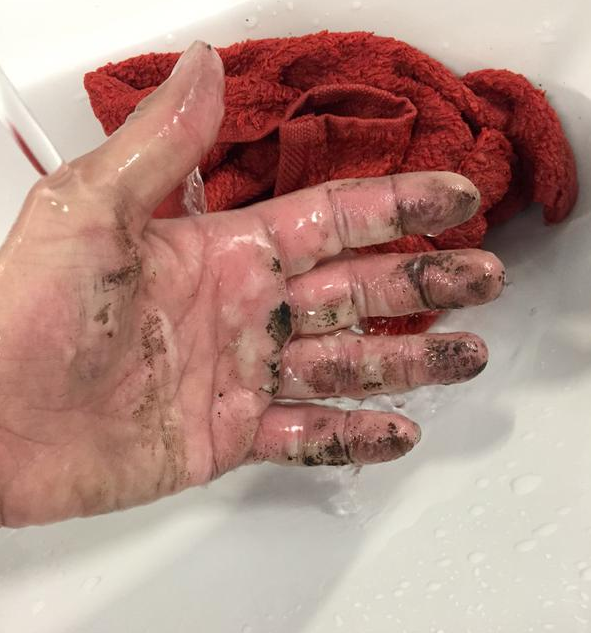
Katy Emslie’s badly burnt hand, which resulted from trying to extinguish a flaming EE Power Bar.
“It’s our intention to replace these chargers once we’ve completed our investigations; we’ll be in touch once these have been concluded. We’re really sorry for any inconvenience this may cause,” EE says.
If you’ve got an EE Power Bar, best check the little code on the side to see if you have one of the special potentially ‘fizzy’ models.
Until the investigation has been completed, the exchange program has been temporarily suspended.

Tuesday, July 14, 2015

the Ugly Indian

There's a silent revolution brewing in India, and it's called The Ugly Indian. It is anonymous, faceless and leaderless, and has seen thousands of citizens coming out to fix local civic problems following a simple motto: Kaam Chalu Mooh Bandh. Only Work No Talk. What started off as a series of social experiments in Bangalore in 2011, to see what it takes to change everyday ugly Indian behaviour in public spaces (littering, spitting paan, public urination and more), has now transformed into a nation-wide movement that is spreading virally – both on social media, and on the ground. The centrepiece of the TUI approach is the 'spotfix ' where ugly spots are 'fixed' by citizens. There is no activism, no sloganeering, no lecturing, no finger-pointing and no ideological debates – just a sincere attempt to solve problems by focusing on a spot - using one's own time, hands and money.

Monday, June 29, 2015

Facebook Is Opening Its First Office in Africa

Facebook Is Opening Its First Office in Africa

Johannesburg, South Africa.
Robyn Gwilt/ Shutterstock
Johannesburg, South Africa.
Facebook, which has been working to build its user base in Africa through programs like Internet.org and lightweight versions of its app, is opening a new business office in Johannesburg, South Africa, the company’s first permanent office on the continent.
The office will serve as a sales hub, helping Facebook learn about and attract small businesses from the region that may want to advertise to Facebook’s audience, which is growing in the region. Facebook has hired Nunu Ntshingila, chairman of Ogilvy South Africa, to run the new office as the company’s Head of Africa, a new position.

International revenue has always been important for Facebook. More than half of the company’s ad revenue comes from outside the United States and Canada, and has for a number of years.
That percentage is slowly eroding, though, from 56 percent in Q1 2013 to 52 percent last quarter. Facebook is relying more and more on high-priced ads in North America versus other parts of the world. A new office like the one in Africa could help expand on that international business.
Facebook is also hoping to learn more about what kinds of advertising actually work in Africa as a way to lure big brands like Coca-Cola and Virgin Mobile that may want to reach the site’s African user base. The company launched a Creative Accelerator program earlier this year to do just that.
Product head Chris Cox also talked at the Cannes Lions advertising festival last week about Facebook’s plans to build ads that work on feature phones for users who don’t have strong wireless connections.

All of this adds up to a pretty healthy interest in Africa, and Facebook hasn’t been shy about its aspirations. Africa is still very much an emerging market; most of the continent is still without Internet access and those who are online are getting there on mobile devices. For Facebook, a service that’s already amassed 1.4 billion users, Africa provides a region where there’s still plenty of room for growth.

Facebook is experiencing some of that growth now. There are now 120 million Africans who visit Facebook each month, up from 100 million back in September. That’s 20 percent growth in nine months, almost three times the growth rate of Facebook’s total user base.
Facebook has made significant efforts in trying to reach this group of Internet newbies. Internet.org is probably the most well known — and most criticized — example. The initiative offers a free slate of Internet services, including Facebook, to some parts of the world where Internet is not widely available.

Of the 14 countries with Internet.org access, six of them are in Africa.
The new office will not include Internet.org employees, though, at least not right now. Facebook plans to hire 25 employees in its South Africa office, all of them on the business and advertising side of the fence. That number will increase throughout the year.

Sunday, June 28, 2015

SpaceX's Faclon 9 rocket explodes mid-flight

The Falcon 9 rocket launched from Cape Canaveral this morning exploded just minutes after liftoff. The rocket was supposed to deliver cargo to the International Space Station, and no humans were on board. It was the first Falcon 9 that has ever failed, following 18 successful missions.
The mission was also going to serve as the third test of SpaceX's reusable rocket plan. The first stage of the Falcon 9 was supposed to separate three minutes after launch and land itself on a drone ship at sea. The next time SpaceX is scheduled to test the Falcon 9's reusability is on the August 9th launch of the Jason-3 satellite. SpaceX has said that landing will be attempted on land at Vandenburg Airforce Base, not at sea.

There is no immediate threat to life of the astronauts aboard the space station. There is no immediate threat to life of the astronauts aboard the space station. Russia's space agency, Roscosmos, has another resupply mission scheduled for July 3rd. Since NASA always plans ahead, the astronauts are currently stocked through October with supplies.

Still, this is the third space station resupply mission to fail in the last year. In October, Orbital ATK's Antares rocket exploded on the launchpad. And last month, Russia's space agency Roscosmos sent a resupply ship to the station only to have it spin wildly out of control and eventually burn up in the Earth's atmosphere.