Attacks Against LTE Network Protocol
If your mobile carrier offers LTE, also known as the 4G network, you need to beware as your network communication can be hijacked remotely.
A team of researchers has discovered some critical weaknesses in the ubiquitous LTE mobile device standard that could allow sophisticated hackers to spy on users' cellular networks, modify the contents of their communications, and even can re-route them to malicious or phishing websites.
LTE, or Long Term Evolution, is the latest mobile telephony standard used by billions of people designed to bring many security improvements over the predecessor standard known as Global System for Mobile (GSM) communications.
However, multiple security flaws have been discovered over the past few years, allowing attackers to intercept user's communications, spy on user phone calls and text messages, send fake emergency alerts, spoof location of the device and knock devices entirely offline.
4G LTE Network Vulnerabilities.
Now, security researchers from Ruhr-Universität Bochum and New York University Abu Dhabi have developed three novel attacks against LTE technology that allowed them to map users' identity, fingerprint the websites they visit and redirect them to malicious websites by tampering with DNS lookups.
All three attacks, explained by researchers on a dedicated website, abuse the data link layer, also known as Layer Two, of the ubiquitous LTE network.
The data link layer lies on top of the physical channel, which maintains the wireless communication between the users and the network. It is responsible for organizing how multiple users access resources on the network, helping to correct transmission errors, and protecting data through encryption.
Out of three, identity mapping and website fingerprinting developed by the researchers are passive attacks, in which a spy listens to what data is passing between base stations and end users over the airwaves from the target's phone.
However, the third, DNS spoofing attack, dubbed "aLTEr" by the team, is an active attack, which allows an attacker to perform man-in-the-middle attacks to intercept communications and redirect the victim to a malicious website using DNS spoofing attacks.
What is aLTEr Attack?
lte-network-hacking
Since the data link layer of the LTE network is encrypted with AES-CTR but not integrity-protected, an attacker can modify the bits even within an encrypted data packet, which later decrypts to a related plaintext.
"The aLTEr attack exploits the fact that LTE user data is encrypted in counter mode (AES-CTR) but not integrity protected, which allows us to modify the message payload: the encryption algorithm is malleable, and an adversary can modify a ciphertext into another ciphertext which later decrypts to a related plaintext," the researchers said in their paper.
In aLTEr attack, an attacker pretends to be a real cell tower to the victim, while at the same time also pretending to be the victim to the real network, and then intercepts the communications between the victim and the real network.
How aLTEr Attack Targets 4G LTE Networks?
As a proof-of-concept demonstration, the team showed how an active attacker could redirect DNS (domain name system) requests and then perform a DNS spoofing attack, causing the victim mobile device to use a malicious DNS server that eventually redirects the victim to a malicious site masquerading as Hotmail.
The researcher performed the aLTEr attack within a commercial network and commercial phone within their lab environment. To prevent unintended inference with the real network, the team used a shielding box to stabilize the radio layer.
Also, they set up two servers, their DNS server, and an HTTP server, to simulate how an attacker can redirect network connections. You can see the video demonstration to watch the aLTEr attack in action.
The attack is dangerous, but it is difficult to perform in real-world scenarios. It also requires equipment (USRP), about $4,000 worth, to operate—something similar to IMSI catchers, Stingray, or DRTbox—and usually works within a 1-mile radius of the attacker.
However, for an intelligence agency or well-resourced, skilled attacker, abusing the attack is not trivial.
LTE Vulnerabilities Also Impact Forthcoming 5G Standard
The above attacks are not restricted to only 4G.
Forthcoming 5G networks may also be vulnerable to these attacks, as the team said that although 5G supports authenticated encryption, the feature is not mandatory, which likely means most carriers do not intend to implement it, potentially making 5G vulnerable as well.
"The use of authenticated encryption would prevent the aLTEr attack, which can be achieved through the addition of message authentication codes to user plane packets," the researchers said.
"However, the current 5G specification does not require this security feature as mandatory, but leaves it as an optional configuration parameter."
What's Worse? LTE Network Flaws Can't be Patched Straightaway
Since the attacks work by abusing an inherent design flaw of the LTE network, it cannot be patched, as it would require overhauling the entire LTE protocol.
As part of its responsible disclosure, the team of four researchers—David Rupprecht, Katharina Kohls, Thorsten Holz, and Christina Pöpper—notified both the GSM Association and the 3GPP (3rd Generation Partnership Project, along with other telephone companies, before going public with their findings.
In response to the attacks, the 3GPP group, which develops standards for the telecommunications industry, said that an update to the 5G specification might be complicated because carriers like Verizon and AT&T have already started implementing the 5G protocol.
How Can You Protect Against LTE Network Attacks?
The simplest way to protect yourself from such LTE network attacks is to always look out for the secure HTTPS domain on your address bar.
The team suggests two exemplary countermeasures for all carriers:
1.) Update the specification: All carriers should band together to fix this issue by updating the specification to use an encryption protocol with authentication like AES-GCM or ChaCha20-Poly1305.
However, the researchers believe this is likely not feasible in practice, as the implementation of all devices must be changed to do this, which will lead to a high financial and organizational effort, and most carriers will not bother to do that.
2.) Correct HTTPS configuration: Another solution would be for all websites to adopt the HTTP Strict Transport Security (HSTS) policy, which would act as an additional layer of protection, helping prevent the redirection of users to a malicious website.
Besides the dedicated website, the team has also published a research paper [PDF] with all the technical details about the aLTEr attack. Full technical details of the attacks are due to be presented during the 2019 IEEE Symposium on Security and Privacy next May.
Monday, July 2, 2018
New 4G LTE Network Attacks Let Hackers Spy, Track, Spoof and Spam
Security researchers have discovered a set of severe vulnerabilities in
4G LTE protocol that could be exploited to spy on user phone calls and
text messages, send fake emergency alerts, spoof location of the device
and even knock devices entirely offline.
A new research paper [PDF] recently published by researchers at Purdue University and the University of Iowa details 10 new cyber attacks against the 4G LTE wireless data communications technology for mobile devices and data terminals.
The attacks exploit design weaknesses in three key protocol procedures of the 4G LTE network known as attach, detach, and paging.
Unlike many previous research, these aren't just theoretical attacks. The researchers employed a systematic model-based adversarial testing approach, which they called LTEInspector, and were able to test 8 of the 10 attacks in a real testbed using SIM cards from four large US carriers.
Other notable attacks reported by the researchers could allow attackers to obtain victim’s coarse-grained location information (linkability attack) and launch denial of service (DoS) attack against the device and take it offline (detach attack).
Using panic attack, attackers can create artificial chaos by broadcasting fake emergency messages about life-threatening attacks or riots to a large number of users in an area.
What's interesting about these attacks is that many of these can be carried out for $1,300 to $3,900 using relatively low-cost USRP devices available in the market.
Researchers have no plans to release the proof-of-concept code for these attacks until the flaws are fixed.
Although there are some possible defenses against these observed attacks, the researchers refrained from discussing one.
A new research paper [PDF] recently published by researchers at Purdue University and the University of Iowa details 10 new cyber attacks against the 4G LTE wireless data communications technology for mobile devices and data terminals.
The attacks exploit design weaknesses in three key protocol procedures of the 4G LTE network known as attach, detach, and paging.
Unlike many previous research, these aren't just theoretical attacks. The researchers employed a systematic model-based adversarial testing approach, which they called LTEInspector, and were able to test 8 of the 10 attacks in a real testbed using SIM cards from four large US carriers.
- Authentication Synchronization Failure Attack
- Traceability Attack
- Numb Attack
- Authentication Relay Attack
- Detach/Downgrade Attack
- Paging Channel Hijacking Attack
- Stealthy Kicking-off Attack
- Panic Attack
- Energy Depletion Attack
- Linkability Attack
Among the above-listed attacks, researchers consider an authentication
relay attack is particularly worrying, as it lets an attacker connect to
a 4G LTE network by impersonating a victim's phone number without any
legitimate credentials.
This attack could not only allow a hacker to compromise the cellular
network to read incoming and outgoing messages of the victims but also
frame someone else for the crime."Through this attack the adversary can poison the location of the victim device in the core networks, thus allowing setting up a false alibi or planting fake evidence during a criminal investigation," the report said.
Other notable attacks reported by the researchers could allow attackers to obtain victim’s coarse-grained location information (linkability attack) and launch denial of service (DoS) attack against the device and take it offline (detach attack).
"Using LTEInspector, we obtained the intuition of an attack which enables an adversary to possibly hijack a cellular device’s paging channel with which it can not only stop notifications (e.g., call, SMS) to reach the device but also can inject fabricated messages resulting in multiple implications including energy depletion and activity profiling," the paper reads.
Using panic attack, attackers can create artificial chaos by broadcasting fake emergency messages about life-threatening attacks or riots to a large number of users in an area.
What's interesting about these attacks is that many of these can be carried out for $1,300 to $3,900 using relatively low-cost USRP devices available in the market.
Researchers have no plans to release the proof-of-concept code for these attacks until the flaws are fixed.
Although there are some possible defenses against these observed attacks, the researchers refrained from discussing one.
The paper reads: "retrospectively adding security into an existing protocol without breaking backward compatibility often yields band-aid-like-solutions which do not hold up under extreme scrutiny."
"It is also not clear, especially, for the authentication relay attack whether a defense exists that does not require major infrastructural or protocol overhaul," it adds. "A possibility is to employ a distance-bounding protocol; realization of such protocol is, however, rare in practice."The vulnerabilities are most worrying that once again raise concerns about the security of the cell standards in the real world, potentially having an industry-wide impact.
Thursday, June 28, 2018
How to read a privacy policy
We haven’t been able to avoid privacy policies in our post-GDPR world, but figuring out what these legal documents are trying to tell us isn’t easy. They’re typically filled with legalese and boring chatter about data and how it’s handled. I get why no one wants to spend time reading them.
So to save us all some effort, I called a couple lawyers — Nate Cardozo from the Electronic Frontier Foundation and Joseph Jerome from the Center for Democracy and Technology — to learn how they read and process tons of policies. They’ve given me a few tips on how we can essentially skim through a privacy policy while still learning something about how our data is handled.
Cardozo and Jerome suggest looking for the information collected about you. The company won’t necessarily list everything, but you can typically get at least a rough idea of what kind of information a product or service is amassing. Jerome also searches for the word “control,” because this could lead to data and privacy controls you didn’t know you had. Searching in Instagram’s data policy for “control,” for example, shows where you can edit your privacy settings and how to opt out of Facebook’s facial recognition technology. You may have never found these menus otherwise. You can also look at the date a policy was published. Obviously, a more recent one is a good sign the company is thinking about privacy more proactively.
"“Such as” is a broad term"
You might also want to search for the word “not,” Jerome says, because it’s rare to find in a policy. Of course, most companies would rather not permanently limit themselves by including what they’re not doing, which could leave them open to lawsuits. Finally, Cardozo suggests checking out how many times you find “such as” because it’s a red flag. I would normally think it means that companies are being specific, but Cardozo says it’s actually a broad phrase that doesn’t usually provide much information.
Generally, privacy policies are lengthy and complicated. They’re designed to protect companies from lawsuits. These tips won’t cover everything in a policy, but they’ll at least get you started in your journey to figure out what’s actually happening to your data.
By Ashley Carman @ashleyrcarman
Monday, January 15, 2018
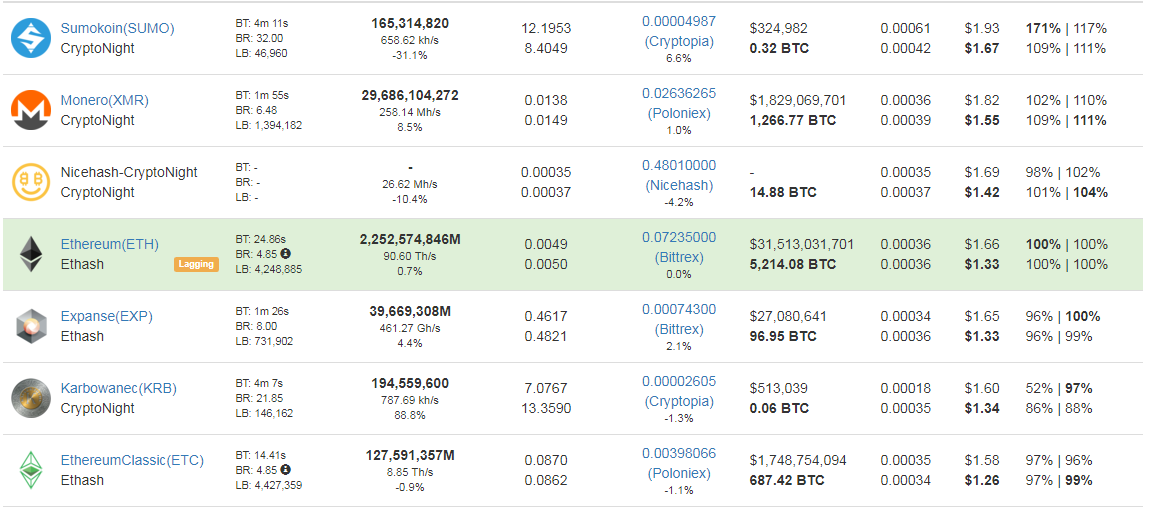
The best Cryptocurrencies to mine with GPU/CPU right now
When
Bitcoin started it was made so any average person could mine it on
their home computer. Currently difficuly is too high but still there are
many coins which can be only mined on CPU/GPU or that are at least
still worth it.
Lets have a look on whats the best now.

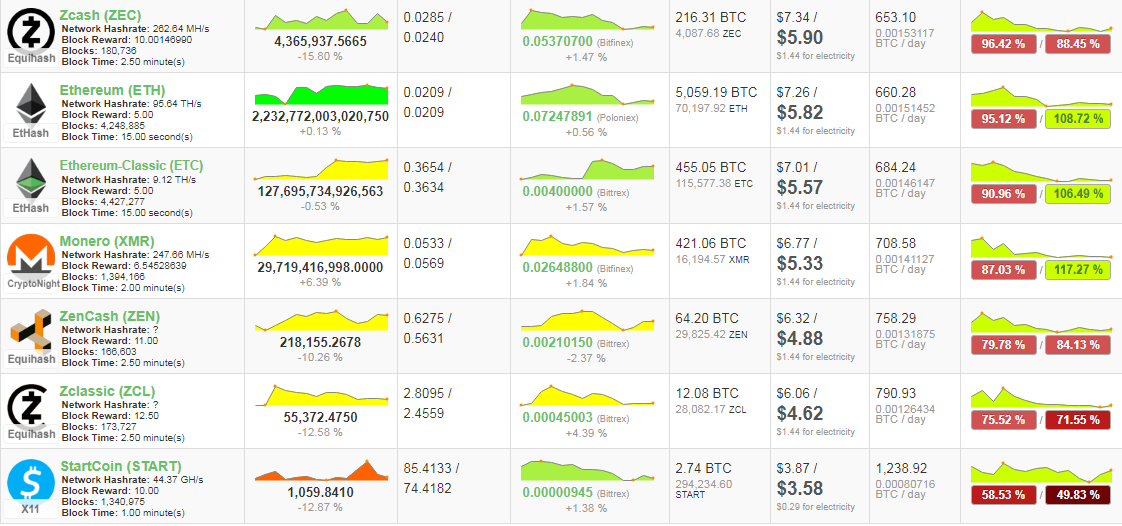
So ZEC and its forks ZCL ZEN are the best. Ethereum on second place. Worth noting that ETH soon will go into PoS mode so mining this might be historical soon.

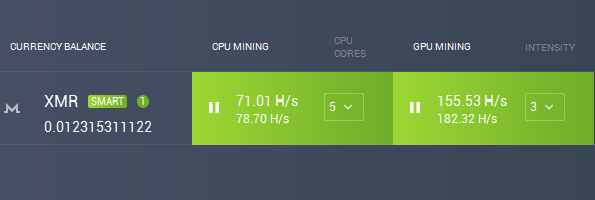
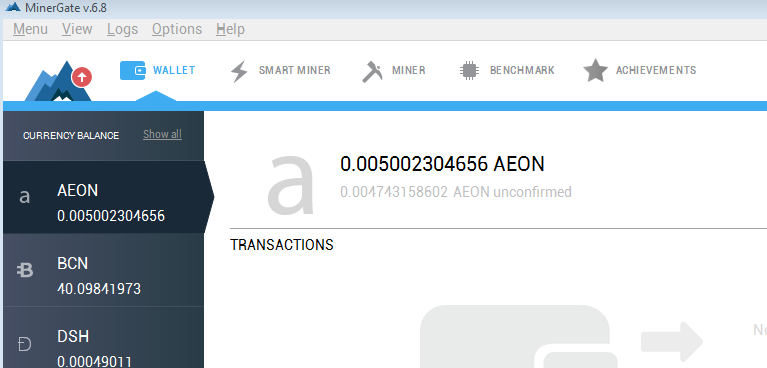
This guys in their auto app choose XMR for now for GPU and in CPU. Whats cool in latest app version is that you can withdrawal coins mined right from the app, dont need to get on website at all (need to register first HERE).


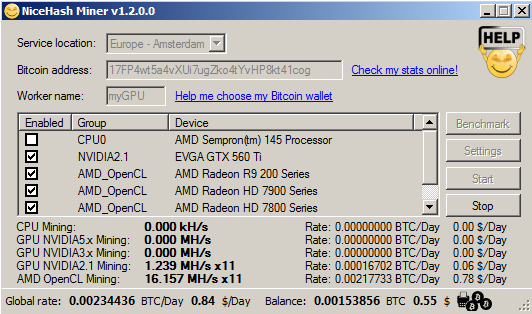
Their app auto chooses what to mine and currently its XMR algo.

Interestingly it says SUMO is the top coin for payment, then we have XMR (which SUMO is fork of) and then NiceHash.. Possibly people mine SUMO today for payments on those.
in CPU XMR Monero wins, no doubt in this.
Lets have a look on whats the best now.
CoinWarz

So ZEC and its forks ZCL ZEN are the best. Ethereum on second place. Worth noting that ETH soon will go into PoS mode so mining this might be historical soon.
Minergate

This guys in their auto app choose XMR for now for GPU and in CPU. Whats cool in latest app version is that you can withdrawal coins mined right from the app, dont need to get on website at all (need to register first HERE).

NiceHash

Their app auto chooses what to mine and currently its XMR algo.
What To Mine

Interestingly it says SUMO is the top coin for payment, then we have XMR (which SUMO is fork of) and then NiceHash.. Possibly people mine SUMO today for payments on those.
Summary
If you are very lazy go for MinerGate since they are on iMAC,Linux and Windows. If you are little less lazy and want better profits mine directly ZEC or use NiceHash but windows only or you have to point your miners ot them directly.in CPU XMR Monero wins, no doubt in this.
Friday, September 8, 2017
How Do We Mourn In a Digital Age? 哀傷,在這新的世界?
This is a question that I have no answers. It's open for everyone to think about.
I came across this post today about our loss of a brilliant Steemian @lauralemons. I seemed to see this name but cannot recall exactly. I wasn't privileged enough to know her but obviously a lot of old Steemians know her so I can feel their grief.
As I didn't know her, this post isn't about Laura. Just that the post reminds me of my past experience of mourning a close relative of mine. A few years back, I lost a younger cousin of mine. She was only a little over thirty back then. Let's call her Angel.
Angel was the daughter of my mom's sister. She was a warm, caring and optimistic person with always a smile on her face. Even she was diagnosed with a troublesome disease at a very young age, her smile wasn't seemed to be shadowed by this saddened incident. She and I weren't in the same city, so we did not see each other often. Mostly once a year during the new year holidays. But we feel close when we see each other every time.
She was in the service industry for her entire career. She likes to interact with people I guess although these kind of jobs don't get you good salaries here. I have always admired her braveness as had this happened to me, I would have been very depressed to even lead a normal life. Later when I got married and later was blessed with a lovely baby boy, Angel was there to cheer for us and very happy to be his auntie. Angel did not get married probably due to her disease, so she shared her love to those kids in the family including mine.
One day I was told that Angel passed away and I was speechless and shocked. She was probably the first close relative of my generation to pass away. How could it be? how could it? She was so young and beautiful and caring and nice and everything... Why would God want to take her away? Just like that. Life disappeared overnight. Without a sign.
I didn't go to her funeral as my family thought we were so close. We weren't and we were. I did not blame them for not letting me know. So I might had cried for a few hours and was depressed for a few days but I got over it as we did not really have very deep attachment.
Three months later. I received a message from facebook. Today is Angel's birthday! Write a birthday wish on her timeline ... It was then I realize for the first time that people don't die on facebook. They can live as long as facebook shall live. I checked all the most recent messages on her page. Three months ago, there were a lot of messages expressing condolences. Some were even told by these mourning and got shocked. How advanced are we to learn others' death from internet messages...
As I checked Angel's photos of her fantastic life (yeah, quite a lot of places she had been to and a lot of cuisines she had eaten), I felt relieved to see her had a good run but at the same time I knew that facebook messages sometimes do not even come close to one's real life. I could only hope for the better.
I wrote a few words for her as well. Still a happy birthday to her although she had started another one. And said something like she will always be on our mind. I had no one to say to except facebook version of her.
I knew that at this time next year, facebook would notify me again. As no one will ever want to turn that page off. Angel will always be there. Always like that in her thirty's. She will not get old like we will. One day her nephew will grow to be his auntie's age...
In this digital age, we can all have a version of us online, on the blockchain maybe ... maybe even your entire life can be mostly recorded in the future ... If the technology is going to gather more and more information or even get an AI to mimic the dead, it will certainly make us dizzy and wonder what death means then....
Still, at the bottom of my heart, I know that she had left. No matter how many photos there are how many words she said there are... She was long gone. And I can imagine that even an AI can pretend to be her to some extreme standard, I can tell the difference.
The way we mourn our love ones' death is always the same. Never will it change. What changes is only the format. Deep down there is no other way for a human to mourn a human. If there is, we are not human any more.
Sorry, the blockchain does not have answer this time.

image - pixabay
今天意外看到這篇文章,說的是一個令人悲傷的消息,一位資深的Steemian @lauralemons過世了。我對於這名字有模糊的印象,但應該沒有什麼交集或淵源,只是看到許多老用戶在悼念她,同感到悲傷而已。
這讓我想到,多年前我一個表妹的過世。表妹是一個開朗樂觀、永遠臉上帶著微笑的小女孩。在我心中,她永遠是這樣一個可愛的女孩,只是後來我已經看不到她變老了。
表妹長年在南部,偶而也到過台北工作過幾年,但我們通常很少機會見面。過年時回老家,親戚聚會是最可能的場合。她總是笑咪咪,開朗迎人,我從不曾在她臉上看過哀傷。但造化弄人,表妹在年紀很輕時就被診斷出一種不好對付的疾病,當時我們知道後都感到十分震驚,但她臉上的笑容卻似乎從不曾受到影響。媽媽偶爾會更新她治療的情況,但我總是不忍多聽,後來似乎也穩定了,生活工作都可以如常。
她在餐飲類服務業工作,可能也是跟她喜歡與人互動有關,即使這行業在台灣並不容易出頭也不容易有高一點的薪水,她仍然樂在其中。聽到她一點一滴在累積自己的資歷,我們也為她感到高興。可能因為生病之故,她都沒有走向結婚這條路,就連男朋友也沒有聽人提起過。但她的愛可以分享給家人,我結婚時,生小孩時,她都參與其中且可以感受到她的真心歡喜。
幾年前某天,家人通知我,表妹過世了。一時之間,我感到無可置信。她還這麼年輕啊?上天為什麼要這麼殘酷呢?這麼好的一個人,這麼豐沛的愛,世界真的就這麼殘忍嗎?當時,死亡對我來說,都是七老八十的家族親長們,悲傷固然,悲痛不至於,這是生命的常態,說得過去。三十年華的表妹,說不過去,不合理,不應該。沒有人會回答你這問題。痛哭幾小時,再加上幾天的低落情緒後,我算是終於走出這情緒,畢竟我們不算真正有培養深厚的家人般的情感。面對這些,只能讓時間過去。
三個月後,我臉書接到一個訊息,通知我今天是表妹的生日,要我留言祝福。那是我第一次意識到,臉書可以讓你長生不老,永遠存在,只要伺服器不關。我都忘記我有她臉書了。於是我瀏覽著她臉書過去三個月來的訊息,三個月前,哀悼的訊息湧入,祝福她一路好走,下輩子再做朋友等等... 還有人明顯是到這裡才被通知死訊,震驚於此事的發生... 好殘忍的時代啊,臉書通知妳臉友的死亡...
我看著表妹過往的照片,她一如過往般的,似乎在三個月前的時光裡,仍那般快樂悠閒。拉拉拉拉,你可以上看她這幾年的生活,到哪裡去玩,吃了什麼東西,轉通知朋友什麼生活小訊息,開心跟其他朋友合照等等... 一切都還在,彷彿觸手可及... 雖然臉書所呈現的生活,跟真正的生活有可能是天差地別的,但我們作為生者,總是願意相信任何亡者曾經非常快樂的徵候,總是希望她不曾有過遺憾,走的時候快速而安靜,趕緊下一趟美好的旅程...
我也不免俗地留下紀錄。祝福她這一生的生日快樂,希望她下一生也早日快樂。告訴她,我們永遠會念著她。顯然是寫給我自己看的。她已經走了,不在臉書上了,但也許我們不知道,其實她看得見?那時我知道,明年此時,我還會收到通知,我相信祖克伯的工程師們。
沒有人會有動機想去關掉表妹的帳戶,家人尤其是。誰不希望能永遠看到她這樣的存在。她的臉書版本,會一直存在,她不會變老,我們才會。兒子長大了,他還不太記得的表阿姨可能漸漸跟他同一年紀。這世界,這數位的世界,甚至是這區塊鏈的世界,可以把人都數位化了,栩栩如生你看過嗎?相片比本人更真實。影像不用說,聲音不用說,甚至以後會有AI來模擬人的說話與表情?可能還能在我七十大壽時聽到表妹的祝賀?
天啊?那樣的世界又該怎麼面對?我們既不捨於亡者的離去,難道就能接受他們的永存?
內心深處,我知道表妹就是走了。在多相片、影音甚至AI都無法模擬。她早已經走遠了,我們也該離開了,彼此懷著記憶裡的愛離開吧。數位化、智慧化,都只是表象。
一個人類哀悼另一個人類的死亡,只能有一種方式。那就是讓時間遺忘傷痛,留下美好的記憶。或就是只是遺忘。
這是不會變的。如果有一天變了,那人類可能也不再是人類了吧?
區塊鏈今天請閉嘴吧。
I came across this post today about our loss of a brilliant Steemian @lauralemons. I seemed to see this name but cannot recall exactly. I wasn't privileged enough to know her but obviously a lot of old Steemians know her so I can feel their grief.
As I didn't know her, this post isn't about Laura. Just that the post reminds me of my past experience of mourning a close relative of mine. A few years back, I lost a younger cousin of mine. She was only a little over thirty back then. Let's call her Angel.
Angel was the daughter of my mom's sister. She was a warm, caring and optimistic person with always a smile on her face. Even she was diagnosed with a troublesome disease at a very young age, her smile wasn't seemed to be shadowed by this saddened incident. She and I weren't in the same city, so we did not see each other often. Mostly once a year during the new year holidays. But we feel close when we see each other every time.
She was in the service industry for her entire career. She likes to interact with people I guess although these kind of jobs don't get you good salaries here. I have always admired her braveness as had this happened to me, I would have been very depressed to even lead a normal life. Later when I got married and later was blessed with a lovely baby boy, Angel was there to cheer for us and very happy to be his auntie. Angel did not get married probably due to her disease, so she shared her love to those kids in the family including mine.
One day I was told that Angel passed away and I was speechless and shocked. She was probably the first close relative of my generation to pass away. How could it be? how could it? She was so young and beautiful and caring and nice and everything... Why would God want to take her away? Just like that. Life disappeared overnight. Without a sign.
I didn't go to her funeral as my family thought we were so close. We weren't and we were. I did not blame them for not letting me know. So I might had cried for a few hours and was depressed for a few days but I got over it as we did not really have very deep attachment.
Three months later. I received a message from facebook. Today is Angel's birthday! Write a birthday wish on her timeline ... It was then I realize for the first time that people don't die on facebook. They can live as long as facebook shall live. I checked all the most recent messages on her page. Three months ago, there were a lot of messages expressing condolences. Some were even told by these mourning and got shocked. How advanced are we to learn others' death from internet messages...
As I checked Angel's photos of her fantastic life (yeah, quite a lot of places she had been to and a lot of cuisines she had eaten), I felt relieved to see her had a good run but at the same time I knew that facebook messages sometimes do not even come close to one's real life. I could only hope for the better.
I wrote a few words for her as well. Still a happy birthday to her although she had started another one. And said something like she will always be on our mind. I had no one to say to except facebook version of her.
I knew that at this time next year, facebook would notify me again. As no one will ever want to turn that page off. Angel will always be there. Always like that in her thirty's. She will not get old like we will. One day her nephew will grow to be his auntie's age...
In this digital age, we can all have a version of us online, on the blockchain maybe ... maybe even your entire life can be mostly recorded in the future ... If the technology is going to gather more and more information or even get an AI to mimic the dead, it will certainly make us dizzy and wonder what death means then....
Still, at the bottom of my heart, I know that she had left. No matter how many photos there are how many words she said there are... She was long gone. And I can imagine that even an AI can pretend to be her to some extreme standard, I can tell the difference.
The way we mourn our love ones' death is always the same. Never will it change. What changes is only the format. Deep down there is no other way for a human to mourn a human. If there is, we are not human any more.
Sorry, the blockchain does not have answer this time.

image - pixabay
今天意外看到這篇文章,說的是一個令人悲傷的消息,一位資深的Steemian @lauralemons過世了。我對於這名字有模糊的印象,但應該沒有什麼交集或淵源,只是看到許多老用戶在悼念她,同感到悲傷而已。
這讓我想到,多年前我一個表妹的過世。表妹是一個開朗樂觀、永遠臉上帶著微笑的小女孩。在我心中,她永遠是這樣一個可愛的女孩,只是後來我已經看不到她變老了。
表妹長年在南部,偶而也到過台北工作過幾年,但我們通常很少機會見面。過年時回老家,親戚聚會是最可能的場合。她總是笑咪咪,開朗迎人,我從不曾在她臉上看過哀傷。但造化弄人,表妹在年紀很輕時就被診斷出一種不好對付的疾病,當時我們知道後都感到十分震驚,但她臉上的笑容卻似乎從不曾受到影響。媽媽偶爾會更新她治療的情況,但我總是不忍多聽,後來似乎也穩定了,生活工作都可以如常。
她在餐飲類服務業工作,可能也是跟她喜歡與人互動有關,即使這行業在台灣並不容易出頭也不容易有高一點的薪水,她仍然樂在其中。聽到她一點一滴在累積自己的資歷,我們也為她感到高興。可能因為生病之故,她都沒有走向結婚這條路,就連男朋友也沒有聽人提起過。但她的愛可以分享給家人,我結婚時,生小孩時,她都參與其中且可以感受到她的真心歡喜。
幾年前某天,家人通知我,表妹過世了。一時之間,我感到無可置信。她還這麼年輕啊?上天為什麼要這麼殘酷呢?這麼好的一個人,這麼豐沛的愛,世界真的就這麼殘忍嗎?當時,死亡對我來說,都是七老八十的家族親長們,悲傷固然,悲痛不至於,這是生命的常態,說得過去。三十年華的表妹,說不過去,不合理,不應該。沒有人會回答你這問題。痛哭幾小時,再加上幾天的低落情緒後,我算是終於走出這情緒,畢竟我們不算真正有培養深厚的家人般的情感。面對這些,只能讓時間過去。
三個月後,我臉書接到一個訊息,通知我今天是表妹的生日,要我留言祝福。那是我第一次意識到,臉書可以讓你長生不老,永遠存在,只要伺服器不關。我都忘記我有她臉書了。於是我瀏覽著她臉書過去三個月來的訊息,三個月前,哀悼的訊息湧入,祝福她一路好走,下輩子再做朋友等等... 還有人明顯是到這裡才被通知死訊,震驚於此事的發生... 好殘忍的時代啊,臉書通知妳臉友的死亡...
我看著表妹過往的照片,她一如過往般的,似乎在三個月前的時光裡,仍那般快樂悠閒。拉拉拉拉,你可以上看她這幾年的生活,到哪裡去玩,吃了什麼東西,轉通知朋友什麼生活小訊息,開心跟其他朋友合照等等... 一切都還在,彷彿觸手可及... 雖然臉書所呈現的生活,跟真正的生活有可能是天差地別的,但我們作為生者,總是願意相信任何亡者曾經非常快樂的徵候,總是希望她不曾有過遺憾,走的時候快速而安靜,趕緊下一趟美好的旅程...
我也不免俗地留下紀錄。祝福她這一生的生日快樂,希望她下一生也早日快樂。告訴她,我們永遠會念著她。顯然是寫給我自己看的。她已經走了,不在臉書上了,但也許我們不知道,其實她看得見?那時我知道,明年此時,我還會收到通知,我相信祖克伯的工程師們。
沒有人會有動機想去關掉表妹的帳戶,家人尤其是。誰不希望能永遠看到她這樣的存在。她的臉書版本,會一直存在,她不會變老,我們才會。兒子長大了,他還不太記得的表阿姨可能漸漸跟他同一年紀。這世界,這數位的世界,甚至是這區塊鏈的世界,可以把人都數位化了,栩栩如生你看過嗎?相片比本人更真實。影像不用說,聲音不用說,甚至以後會有AI來模擬人的說話與表情?可能還能在我七十大壽時聽到表妹的祝賀?
天啊?那樣的世界又該怎麼面對?我們既不捨於亡者的離去,難道就能接受他們的永存?
內心深處,我知道表妹就是走了。在多相片、影音甚至AI都無法模擬。她早已經走遠了,我們也該離開了,彼此懷著記憶裡的愛離開吧。數位化、智慧化,都只是表象。
一個人類哀悼另一個人類的死亡,只能有一種方式。那就是讓時間遺忘傷痛,留下美好的記憶。或就是只是遺忘。
這是不會變的。如果有一天變了,那人類可能也不再是人類了吧?
區塊鏈今天請閉嘴吧。
Thursday, September 7, 2017
What is Gorilla Glass, Sapphirewhat is Gorilla Glass, Sapphire glass, Tempered Glass & Dragontrail glass glass, Tempered Glass & Dragontrail glass
Gorilla Glass and
Dragontrail Glass are both very hard and tough glasses. Both these
glasses are scratch resistant and are very difficult to break. Here I am
making a clear comparison between these two to find out what makes them
different from each other in terms of their properties and usage.
Lets First get to know what is Gorilla Glass, Sapphire glass, Tempered Glass & Dragontrail glass.
Gorilla Glass :
Gorilla glass is registered trademark of Corning Glass Company of USA, it’s a alkali-aluminosilicate sheet toughened glass, it’s a special type of glass which has following properties, its hard, thin, lightweight & scratch resistant, after steve jobs used gorilla glass on Iphone, gorilla glass became the choice of all high end device makers and used in laptops, mobiles, tablets and other portable devices
Gorilla glass have different versions, like Gorilla glass 2 & newer and better Gorilla glass 4, which is more shatter resistant the previous generation glasses
Also please note that its not the glass which is scratch resistant but it’s the “secret” coating these manufacturer make which gives the hardness along with the chemical process of making glass bonds stronger
Dragontrail:
Dragontrail is also a alkali aluminosilicate glass which is made by Asahi Glass company of Japan, Dragontrail is considered to be more resistant than gorilla glass 2 and suppose to resist scratch better, it can also support more weight upto 60kg. although in drop tests it does not compare well against the Gorilla glass. it can break more easily than GG3
Sapphire Glass:
Sapphire is not glass at all but it’s a crystalline material, sapphire glass is made of synthetic sapphire which are made in labs. Synthetic sapphire is generally made by applying incredibly high heat and pressure to aluminum oxide powder and getting blocks of synthetic spphire, these blocks are then cut and polished in screen sizes and this is what is called a sapphire glass
Sapphire is very hard and compared to gorilla or dragontrail glass but sapphire transmits 6% less light. Also its heavier than gorilla glass of same thickness.
Sapphire glass is nothing new, infact high quality watches have been using sapphire glass from a long time but the watch glass are usually 2 to 3 times thicker than the glass used on mobile devices. But all this has now changed, as companies have found to produce sapphire glass as screens. But sapphire are prone to shatters, they can shatter easily compared to Gorilla Glass or Dragontrail glass.
Tempered Glass:
Tempered glass screen protectors are essentially toughened glass, they are heat treated and chemically treated to make it stronger, it essentially is same as a GG or Dragontrail glass but made to protect devices. it contains different layers like silicon, PVC sheet between glass layers to give it impact resistance. tempered glass are essentially meant to give you the same glass feel of your device screen but to protect against minor scratches, drops. thing to note here is that many tempered glass vendors claim it to have hardness of 9, but those claims are mostly false. they same similar hardness as your normal GG
Hardness levels:
Now to understand what makes these glass resistant to scratches and so hard, we have to understand something called “Mohs scale of mineral hardness” in layman terms, this scale means, anything that has hardness less than the material will not scratch it. For example, quartz has hardness of 7 on Mohs scale, so a material likes copper will not be able to scratch quartz
Coppers Mohs scale of hardness is 3, while quartz is 7
(Please note that Corning values on their official website on the Vickers hardness scale, which is alternative to the Mohs scale)
Corning gorilla glass has a Mohs hardness of 6 for Gorilla glass 2 and its suppose to be 6.7 for newer Gorilla glass 3. Dragontrail glass has hardness of around 6.5 on mohs scale while sapphire glass has hardness of 8 ~ 9.
Gorilla Glass :
Gorilla glass is registered trademark of Corning Glass Company of USA, it’s a alkali-aluminosilicate sheet toughened glass, it’s a special type of glass which has following properties, its hard, thin, lightweight & scratch resistant, after steve jobs used gorilla glass on Iphone, gorilla glass became the choice of all high end device makers and used in laptops, mobiles, tablets and other portable devices
Gorilla glass have different versions, like Gorilla glass 2 & newer and better Gorilla glass 4, which is more shatter resistant the previous generation glasses
Also please note that its not the glass which is scratch resistant but it’s the “secret” coating these manufacturer make which gives the hardness along with the chemical process of making glass bonds stronger
Dragontrail:
Dragontrail is also a alkali aluminosilicate glass which is made by Asahi Glass company of Japan, Dragontrail is considered to be more resistant than gorilla glass 2 and suppose to resist scratch better, it can also support more weight upto 60kg. although in drop tests it does not compare well against the Gorilla glass. it can break more easily than GG3
Sapphire Glass:
Sapphire is not glass at all but it’s a crystalline material, sapphire glass is made of synthetic sapphire which are made in labs. Synthetic sapphire is generally made by applying incredibly high heat and pressure to aluminum oxide powder and getting blocks of synthetic spphire, these blocks are then cut and polished in screen sizes and this is what is called a sapphire glass
Sapphire is very hard and compared to gorilla or dragontrail glass but sapphire transmits 6% less light. Also its heavier than gorilla glass of same thickness.
Sapphire glass is nothing new, infact high quality watches have been using sapphire glass from a long time but the watch glass are usually 2 to 3 times thicker than the glass used on mobile devices. But all this has now changed, as companies have found to produce sapphire glass as screens. But sapphire are prone to shatters, they can shatter easily compared to Gorilla Glass or Dragontrail glass.
Tempered Glass:
Tempered glass screen protectors are essentially toughened glass, they are heat treated and chemically treated to make it stronger, it essentially is same as a GG or Dragontrail glass but made to protect devices. it contains different layers like silicon, PVC sheet between glass layers to give it impact resistance. tempered glass are essentially meant to give you the same glass feel of your device screen but to protect against minor scratches, drops. thing to note here is that many tempered glass vendors claim it to have hardness of 9, but those claims are mostly false. they same similar hardness as your normal GG
Hardness levels:
Now to understand what makes these glass resistant to scratches and so hard, we have to understand something called “Mohs scale of mineral hardness” in layman terms, this scale means, anything that has hardness less than the material will not scratch it. For example, quartz has hardness of 7 on Mohs scale, so a material likes copper will not be able to scratch quartz
Coppers Mohs scale of hardness is 3, while quartz is 7
(Please note that Corning values on their official website on the Vickers hardness scale, which is alternative to the Mohs scale)
Corning gorilla glass has a Mohs hardness of 6 for Gorilla glass 2 and its suppose to be 6.7 for newer Gorilla glass 3. Dragontrail glass has hardness of around 6.5 on mohs scale while sapphire glass has hardness of 8 ~ 9.
Now that we know the basics, lets clear few things
Gorilla glass, Dragontrail glass, even your Tempered glass and sapphire glass will all scratch, sapphire will be the hardest to scratch but will scratch none the less, so once you put them or have them dont expect your device to be impervious to damage. treated glass may resist scratches better but tend to shatter.
Thank you!
Tuesday, September 5, 2017
Finland Solves Refugee Identity with Blockchain Debit Cards
Finland has said it has “solved” the problem of refugee identity, using the Blockchain to record data of new residents.
As part of its commitment to support asylum seekers,
Finland is providing arrivals with a prepaid debit card instead of cash,
and linking the identity of cardholders to the Blockchain.
As Technology Review reports,
quoting Finnish Immigration Service director Jouko Salonen, the issue
of “strongly authenticated identity” is no longer a problem.
“We have found a way to solve that,” he told the publication.
The cards are the product of local startup MONI, and function more like a bank account replacement than a simple payment device.
In issuing them, Finnish authorities are able to track both
spending and identity with the added benefit that the Blockchain data
is immutable.
“Our purpose has always been financial inclusion, and
especially to help people in developing countries,” MONI CEO Antti
Pennanen added.
A cross-Europe effort to solve the problem of refugee identity is currently a topic of debate for the European Parliament.
A task force
is looking into the options for using the Ethereum Blockchain to
alleviate the problem, with the latest information showing an allocation
of €850,000 ($1 mln) for 2017 having been half spent.
“[...] EU governments in partnerships with other countries
and organizations (e.g. NGOs) need innovative solutions to manage
increasing flows of migrants and their temporary stay in different
countries,” the organization commented last month.”
Subscribe to:
Posts (Atom)